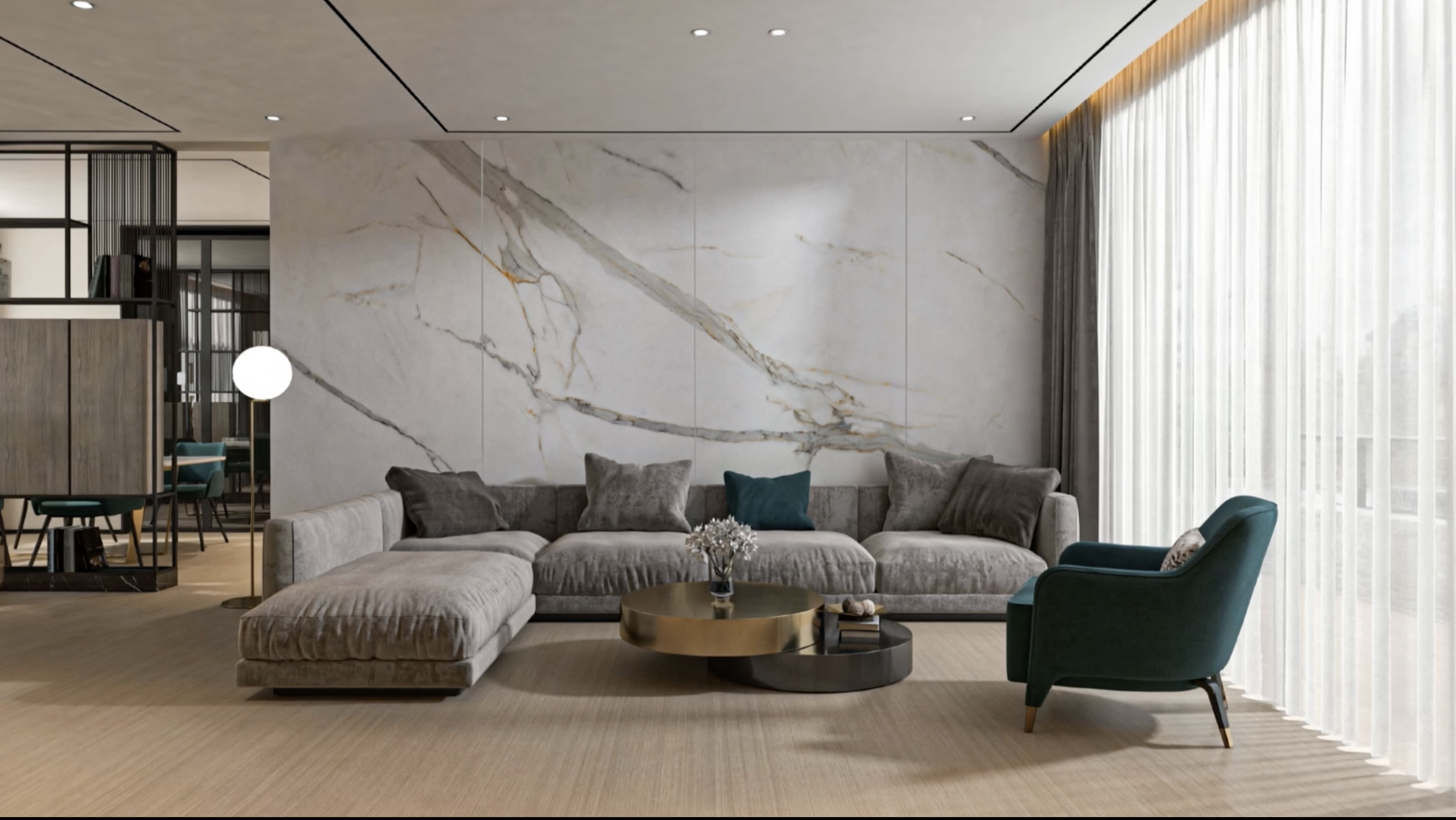
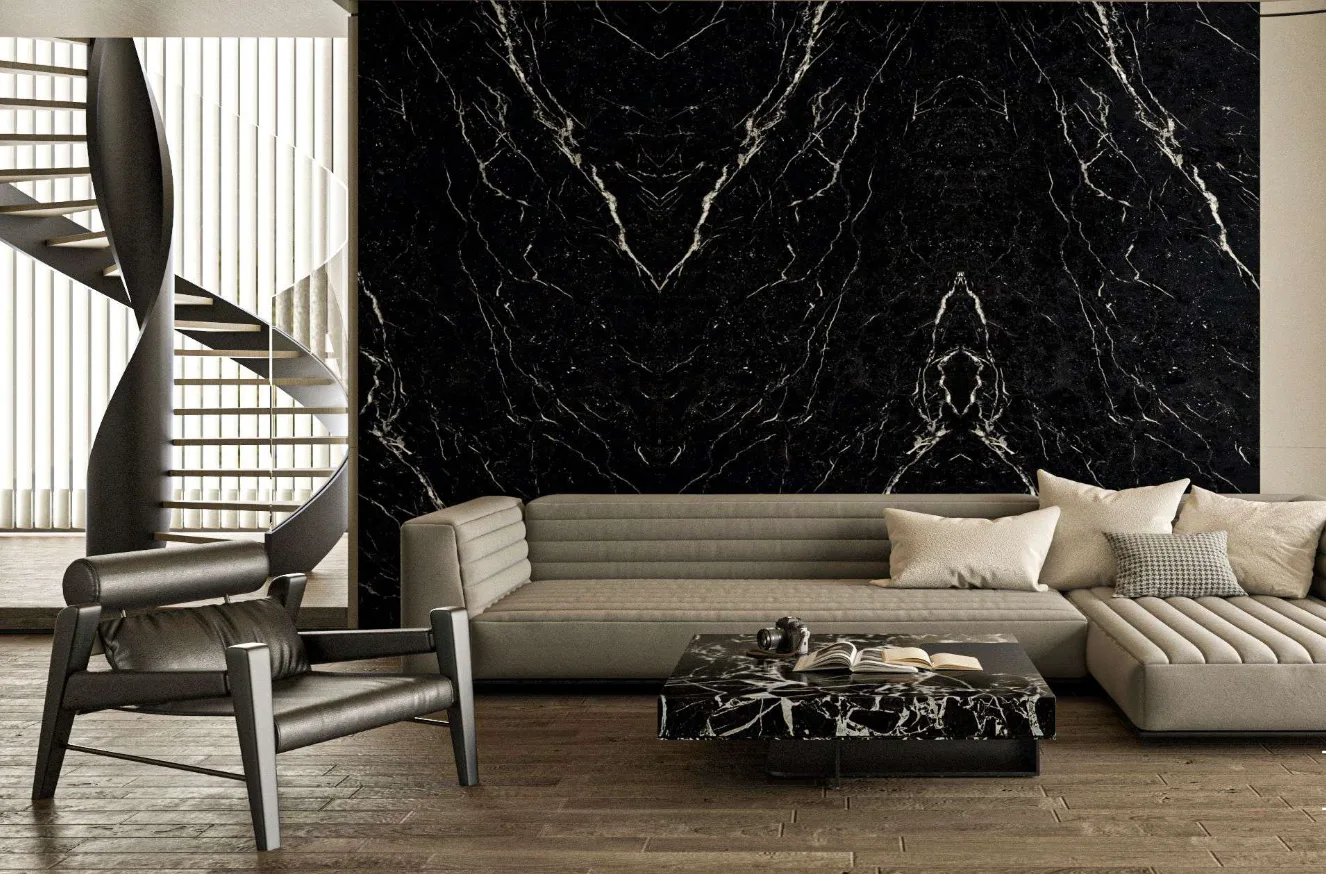
Walk through any tile showroom and the two words appear side by side: porcelain and ceramic. They look similar on the shelf. They are often displayed together, priced within reach of one another, and described with the same vocabulary of finishes and formats. Yet the difference between them decides whether a floor still looks composed after fifteen years of villa life — or whether a terrace survives its first summer in the Gulf sun.
The confusion is understandable, because porcelain is not a rival to ceramic. It is a member of the same family. Both begin as clay, both are shaped and fired, and both are finished with the glazes and textures that give a surface its character. Technically speaking, every porcelain tile is a ceramic tile. Not every ceramic tile, however, earns the name porcelain.
What separates them is not appearance but engineering: the purity of the raw material, the pressure under which it is compacted, and the temperature at which it is fired. Those three decisions in the factory determine everything the tile will do in your home — how much water it absorbs, how much weight it carries, and how gracefully it ages.
This first edition of the Petrona Journal sets out the difference plainly, without jargon and without a sales pitch. By the end, you will know exactly which material belongs in which room — and why.
Porcelain: density as a design decision
Porcelain begins with a more refined recipe. Fine kaolin clays are blended with feldspar and silica, pressed under very high pressure, and fired at temperatures typically between 1,200 °C and 1,400 °C — hot enough for the body of the tile to vitrify, meaning the particles fuse into a dense, glass-like structure with almost no open pores.
That density is not a marketing phrase; it is a measured standard. Under the international classification for ceramic tiles (ISO 13006) and the American standard ANSI A137.1, a tile may only be called porcelain if it absorbs 0.5 per cent or less of its weight in water. Everything that defines porcelain in daily use — its strength, its frost resistance, its resistance to staining — follows from that single figure.
Modern porcelain also carries pattern differently. In full-body porcelain, the colour and material run through the entire thickness of the tile, so a chip — rare as it is — reveals the same tone beneath. In glazed porcelain, high-definition decoration sits on the dense body, which is how today's large-format slabs achieve marble veining and natural stone texture with remarkable realism.
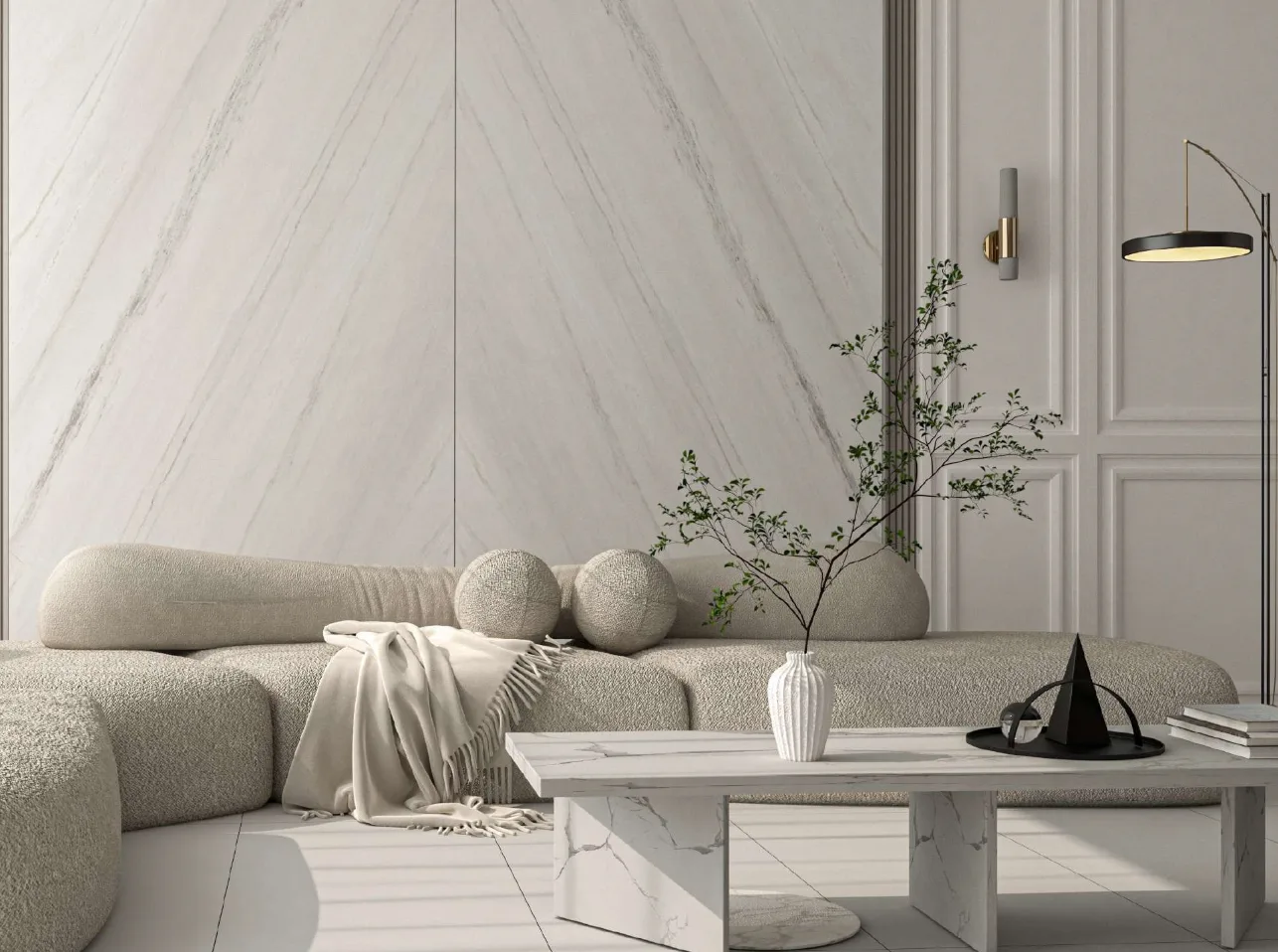
Vitrification simply means the tile has been fired until it behaves more like glass than like earthenware. Water, coffee, oil and dirt find almost nowhere to settle — which is why porcelain is so forgiving in kitchens, bathrooms and busy family homes.
The trade-offs are honest ones. Porcelain's hardness makes it more demanding to cut and drill, so installation calls for experienced hands and proper tooling. And because more energy and finer raw materials go into its production, it typically costs more than a comparable ceramic tile. For floors and hardworking surfaces, that premium usually repays itself over the life of the material.
Ceramic: the versatile original
Ceramic tile is the older, broader craft — the material of Andalusian courtyards, Ottoman baths and mid-century kitchens. It is made from natural red, brown or white clays, pressed and fired at lower temperatures, generally between 1,000 °C and 1,150 °C. The resulting body is less dense than porcelain and absorbs more water — often well above the 0.5 per cent porcelain threshold — which is why ceramic is almost always finished with a protective glaze.
None of this makes ceramic a lesser material. It makes it a different tool. Ceramic is lighter, easier to cut and score, and gentler on the budget — qualities that make it especially well suited to walls, where tiles carry no foot traffic and where its lighter body is an advantage rather than a compromise. A glazed ceramic wall tile in a bathroom or kitchen splashback can perform beautifully for decades.
Its limits are equally clear. The softer body is more vulnerable to chipping under heavy impact, and a chip exposes the clay colour beneath the glaze. Higher water absorption also rules ceramic out for exteriors in climates with temperature extremes, and makes it the more cautious choice for heavy-traffic floors.
One threshold, two materials
Strip away the finishes and formats, and the entire distinction rests on water absorption. International standards draw the line at half of one per cent: at or below it, a tile is porcelain; above it, it is classified among the other ceramic groups. Density, strength, frost resistance and stain resistance all follow from which side of that line a tile sits on.
ISO 13006 Group BIa · ANSI A137.1
Typically 3–10%+ for Wall Tiles
“Porcelain is not a different material from ceramic. It is ceramic, perfected under pressure.”Petrona Journal · Edition No. 01
The comparison, at a glance
The table below summarises how the two materials compare across the criteria that matter in real projects. Treat it as a specification sheet: the terracotta marker indicates the stronger performer for each criterion where a clear difference exists.
Application is everything
Outdoors, there is no debate
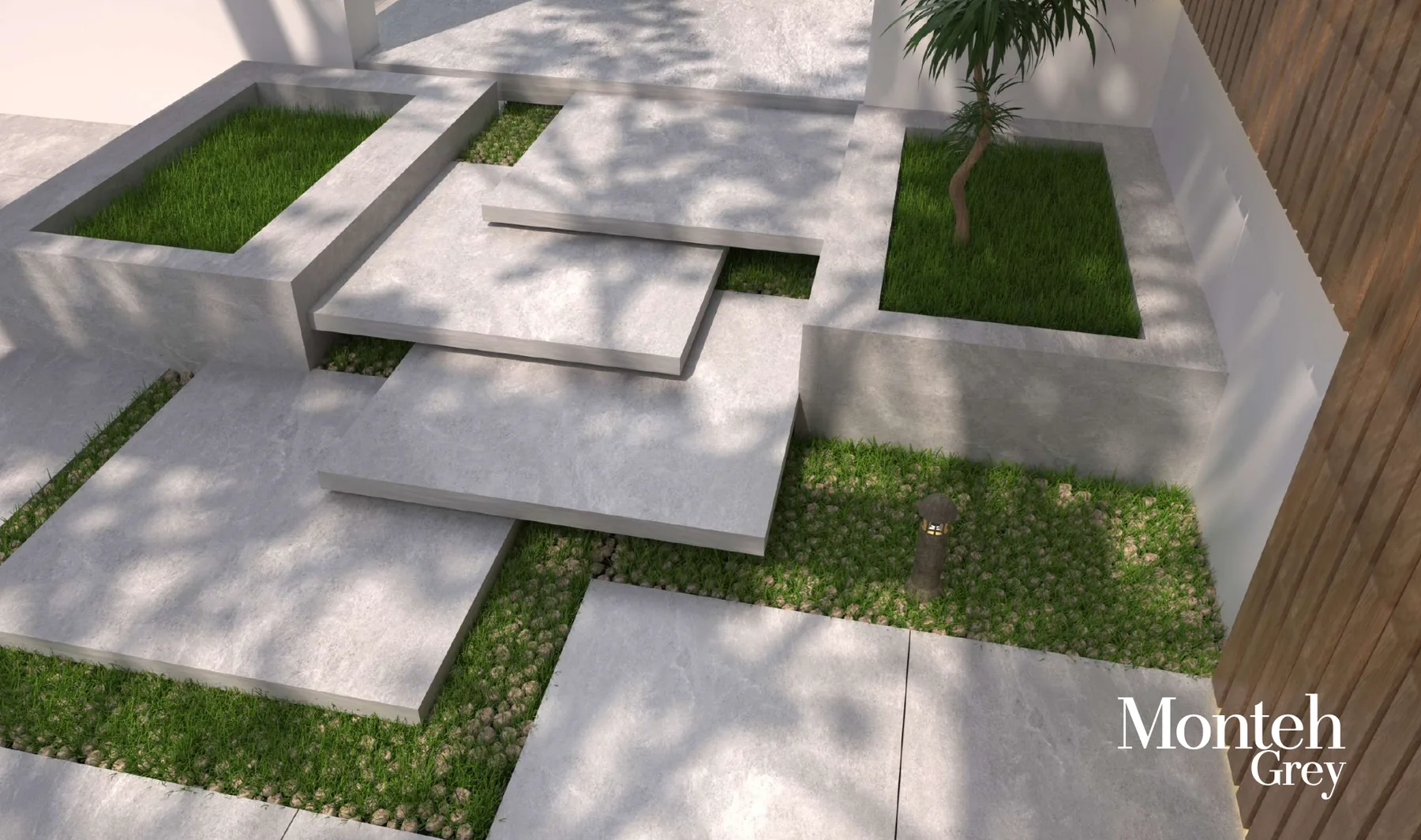
Exterior surfaces in the Emirates endure intense sun, surface temperatures far above the air temperature, occasional heavy rain and constant fine dust. Porcelain's near-zero absorption means there is almost no water within the tile to expand, and its dense body shrugs off thermal cycling. Ceramic's porous body, by contrast, drinks in moisture and weathers poorly outside. For terraces, pool surrounds, walkways and façades, porcelain is the only serious answer — explore our outdoor porcelain collection to see it in structured, slip-resistant finishes.
In bathrooms, the two work as partners
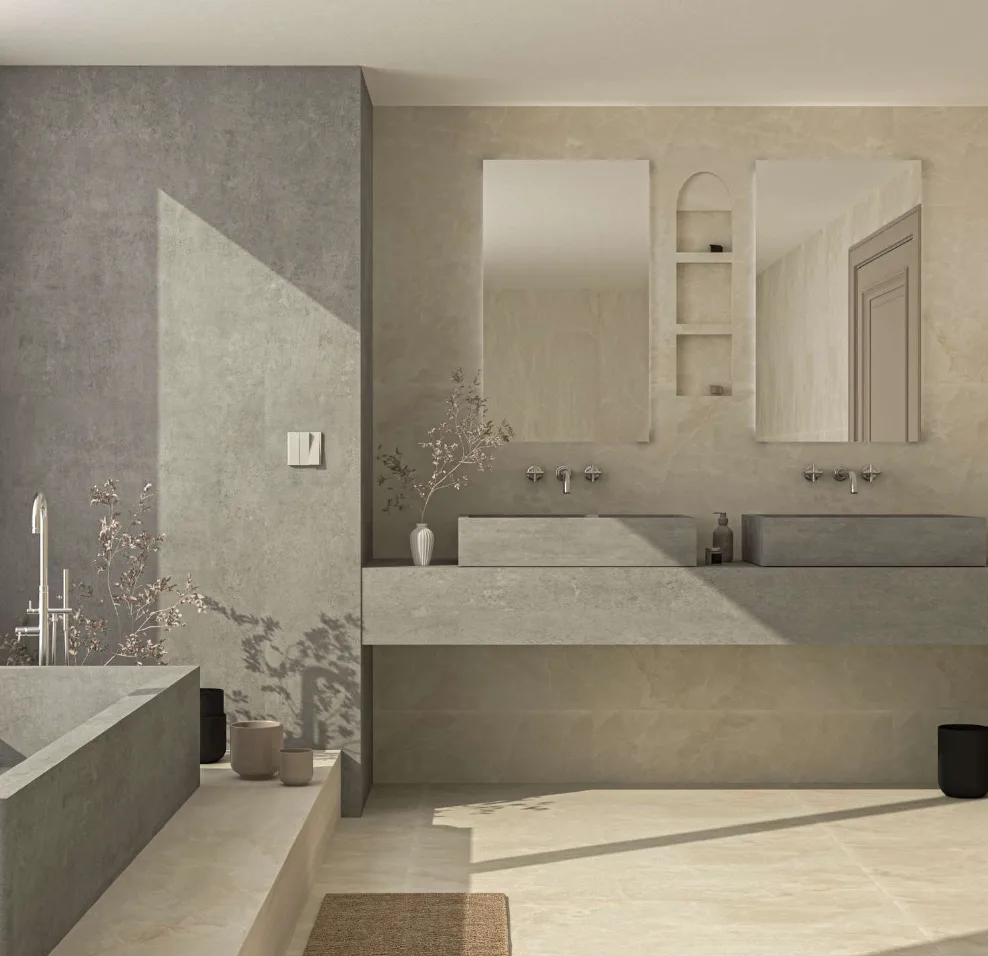
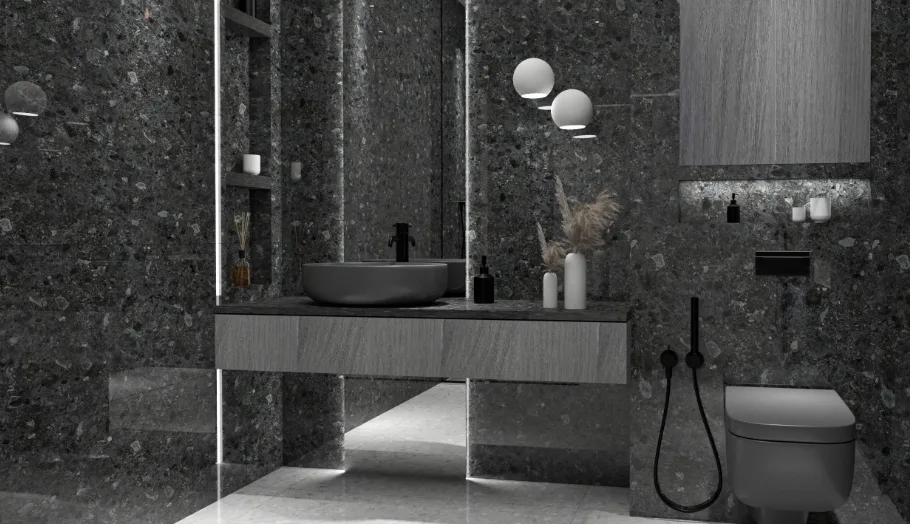
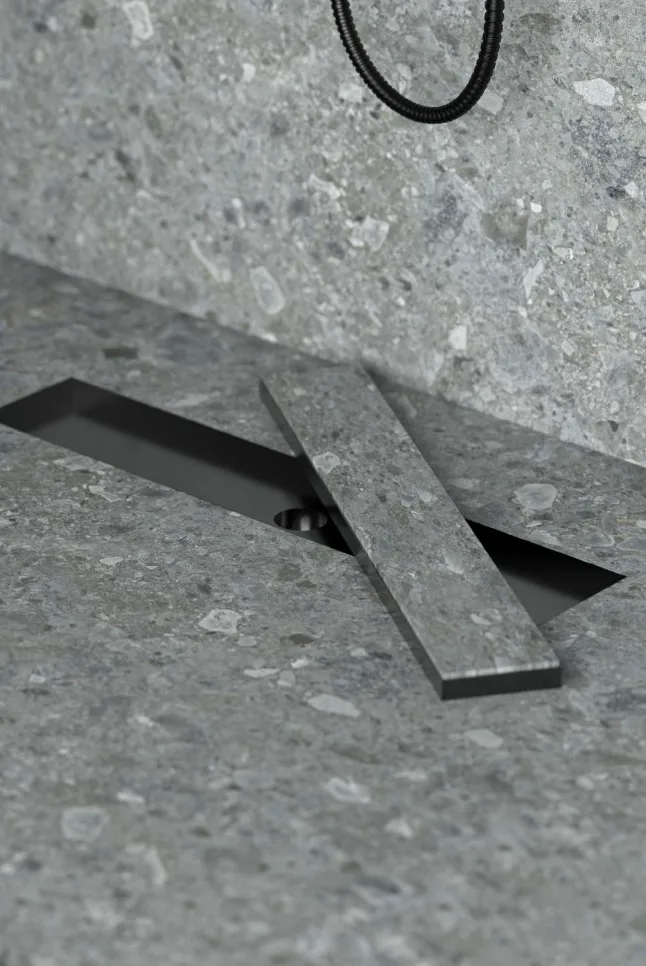
The most elegant bathrooms often use both materials in concert: porcelain underfoot, where water, weight and slip resistance matter most, and glazed ceramic on the walls, where its lighter body and generous range of finishes come into their own. Choosing a textured or matt porcelain floor finish adds grip precisely where it is needed.
Kitchens reward density
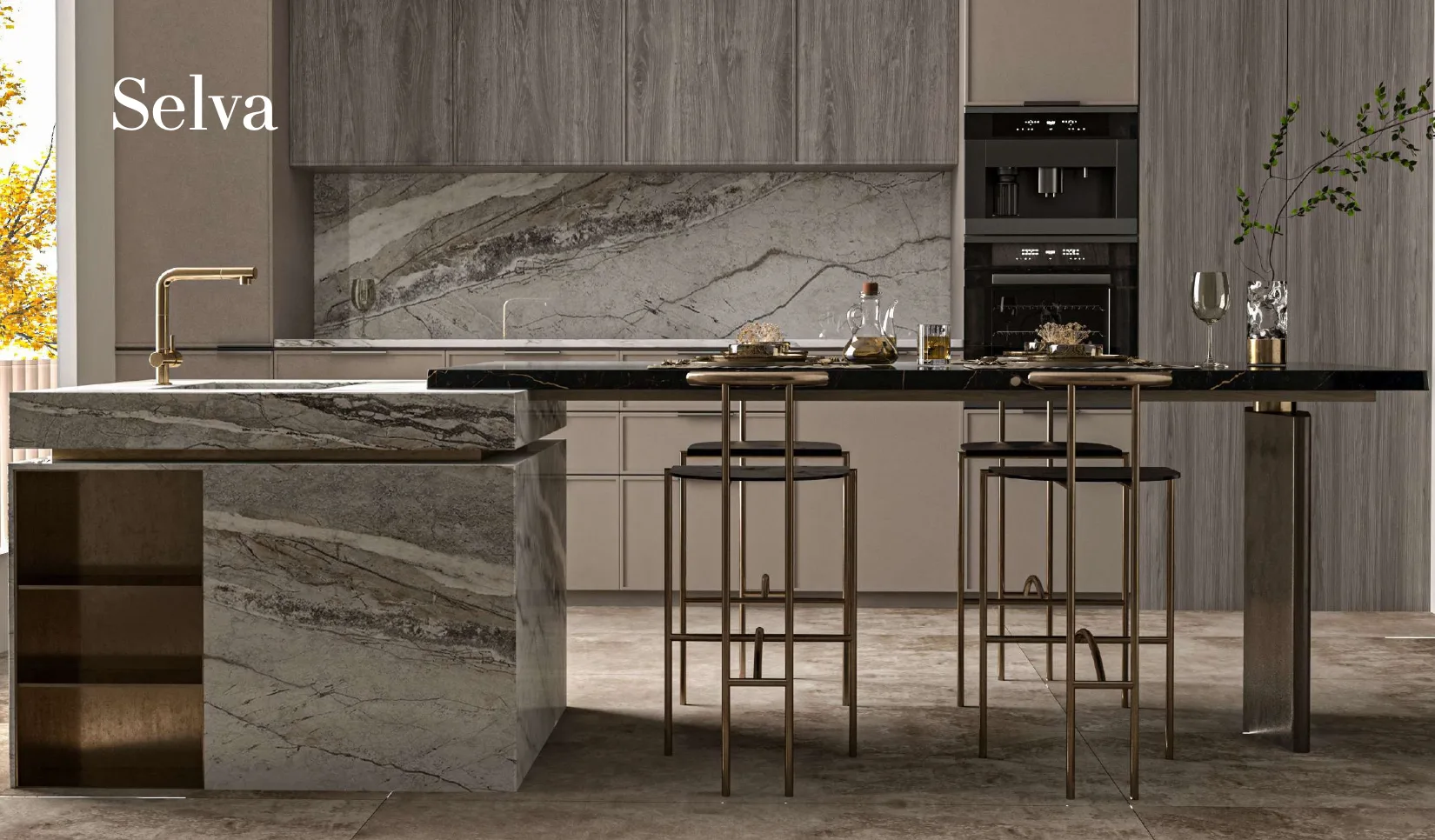
Kitchen floors take dropped pans, dragged chairs, oil and daily cleaning — porcelain territory. The newest chapter is the large-format porcelain slab: surfaces up to countertop scale that bring marble-effect continuity to worktops, islands and full-height splashbacks with far less maintenance than natural stone.
Commercial floors are decided by standards, not taste
Hotels, retail, offices and public buildings specify porcelain as a matter of course. Abrasion-resistance classifications (commonly expressed as PEI classes I–V) and international test methods for breaking strength and deep abrasion exist precisely so that specifiers can match a tile to its traffic. High-traffic commercial floors sit at the top of those classes — and that is porcelain's home ground.
When reviewing a datasheet, three figures tell most of the story: water absorption (ISO 10545-3), breaking strength (ISO 10545-4) and abrasion resistance (ISO 10545-6/7). If a supplier cannot produce them, keep looking.
Our recommendations, project by project
Every project balances performance, budget and design intent differently. These are the honest starting points we give clients in our showroom.
Large households, indoor–outdoor living and long ownership horizons all favour density. Porcelain throughout the ground floor and exteriors; ceramic remains an option for bedroom and bathroom walls.
Porcelain floors in living areas and kitchens; quality glazed ceramic performs well on walls and in lower-traffic rooms, keeping the budget focused where wear actually happens.
Non-negotiable. Choose a textured, slip-resistant finish for pool surrounds and terraces, and lighter tones where surfaces sit in full sun.
Porcelain on the floor — matt or textured for grip — with glazed ceramic or porcelain on walls according to the design and the budget.
Floors and worktop slabs in porcelain for stain and impact resistance; ceramic is a fine economy for splashbacks and feature walls.
Specify by classification: high-PEI porcelain for lobbies, corridors and retail floors. Anything less will show its age within a few years of opening.
Spend on porcelain only where feet and furniture actually travel; use glazed ceramic on walls and in guest rooms. Placement, not compromise, is how a budget stretches.
If the brief is measured in decades — family homes, hospitality, public space — porcelain's lower lifetime maintenance outweighs its higher initial cost.
Three questions before you choose
-
Where will the tile live?
Floor or wall, indoors or out, wet or dry. Outdoor and heavy-traffic answers point to porcelain before any other factor is considered.
-
What will it endure?
Children, pets, trolleys, heels, pool water, direct sun. Match the material's classification to the hardest day it will face, not the average one.
-
How long should it last?
For a five-year refresh, quality ceramic may be the smarter spend. For a surface you never want to think about again, choose porcelain.
“Choose ceramic for what the eye touches. Choose porcelain for what life touches.”The Petrona Rule of Thumb
Neither material is universally better; each is better at something. Ceramic remains an intelligent, economical choice for walls and gentler settings. Porcelain is the engineering answer wherever water, weight, weather or time enters the brief. Understanding the difference — one small number, and everything that flows from it — is what turns a purchase into a specification.
- ISO 13006 — Ceramic tiles: Definitions, classification, characteristics and marking. International Organization for Standardization. Defines Group BIa (dry-pressed tiles with water absorption ≤ 0.5%).
- ANSI A137.1 — American National Standard Specifications for Ceramic Tile. Tile Council of North America. Specifies the ≤ 0.5% water-absorption criterion for porcelain tile.
- ISO 10545 series — Ceramic tiles: Test methods, including Part 3 (water absorption), Part 4 (modulus of rupture and breaking strength), Parts 6–7 (abrasion resistance) and Part 12 (frost resistance).
- Tile Council of North America (TCNA) — TCNA Handbook for Ceramic, Glass, and Stone Tile Installation; industry guidance on tile classification and application.
- Porcelain Tile Certification Agency (PTCA) — Certification programme verifying porcelain water-absorption claims through independent testing.
- A well-classified porcelain tile still depends on the adhesive, grout and installation system behind it — see a later edition of this Journal on tile adhesives, grouts and what makes an installation last.